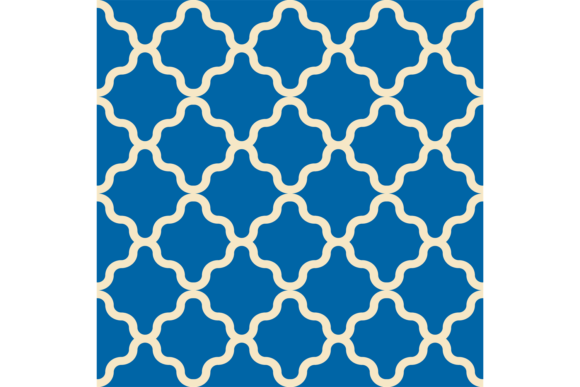
Choosing the Right Islamic Style Line Ornament for Your Creative Projects
The visual language of Islamic art is one of the most sophisticated and enduring design traditions in human history. At its core lies the Islamic style line ornament, a decorative element characterized by intricate geometry, rhythmic repetition, and an absence of figural representation. For designers, architects, and artists working today, integrating these patterns offers a way to infuse projects with depth, cultural resonance, and mathematical beauty. However, selecting the right format—whether a vector illustration in EPS or SVG, or a raster image in JPG—and understanding how these ornaments fit into modern workflows requires careful evaluation.
This guide explores the distinct characteristics of decorative eastern patterns, compares file formats and stylistic approaches, and helps you determine when this specific aesthetic is the optimal choice for your needs.
Defining the Aesthetic: Geometry, Flow, and Symbolism
What sets an Islamic style line ornament apart from other decorative motifs is its foundational reliance on geometry and infinite extension. Unlike floral Victorian borders or organic Art Nouveau lines, Islamic ornamentation often stems from complex grid systems based on circles and polygons. These structures create interlacing lines that weave over and under one another, symbolizing the infinite nature of creation.
When evaluating a decorative eastern pattern, look for three key traits:
- Mathematical Precision: The lines should follow strict geometric rules, creating symmetry that feels balanced rather than accidental.
- Continuity: Traditional designs often imply that the pattern could extend forever without a hard stop, representing eternity.
- Abstraction: Even when inspired by nature (such as the arabesque), the forms are stylized into flowing lines rather than realistic depictions.
Understanding these elements is crucial before downloading assets. A generic "swirl" pack may lack the structural integrity required to authentically represent this style, whereas a well-crafted vector illustration will maintain the correct proportions regardless of scale.
File Formats: Vector vs. Raster for Ornamental Work
One of the most critical decisions in utilizing Islamic line ornaments is choosing the correct file format. The medium dictates the flexibility, scalability, and final application of the design. The market generally offers these assets in three primary formats: EPS, SVG, and JPG.
Vector Illustrations (EPS and SVG)
For professional design work, vector formats are almost always superior. An EPS (Encapsulated PostScript) file is the industry standard for print. It allows you to scale an intricate border from a business card to a building façade without losing resolution. Because Islamic ornaments rely on fine, crisp lines, vectors ensure that edges remain sharp. EPS files are compatible with major design software like Adobe Illustrator and CorelDRAW, making them ideal for editing stroke weights or changing colors to match a brand palette.
SVG (Scalable Vector Graphics) serves a similar purpose but is optimized for the web. If you are incorporating a decorative header or a background pattern into a website, SVG is the logical choice. It loads quickly, scales responsively across devices, and can even be animated via CSS. When searching for resources, prioritize SVG if your end product is digital.
Raster Images (JPG)
JPG files are pixel-based. While they are universally compatible and easy to view, they present significant limitations for line art. Enlarging a JPG ornament often results in pixelation or blurring, which destroys the delicate precision of the geometry. However, JPGs have their place. If you need a quick texture overlay for a social media post, a mockup, or a background where editing individual lines is unnecessary, a high-resolution JPG is a convenient, lightweight option.
Comparison Summary:
- Choose EPS/SVG if: You need to resize the artwork, change colors, separate layers, or use it for professional printing and web development.
- Choose JPG if: You need a static image for immediate use, lack vector editing software, or require a textured background effect where perfect sharpness is less critical.
Stylistic Variations Within the Tradition
Not all Islamic style line ornaments are identical. The tradition spans centuries and regions, resulting in distinct sub-styles that serve different atmospheric purposes. Recognizing these differences helps in selecting a pattern that aligns with your project's tone.
Geometric Girih: This style features sharp, interlocking stars and polygons. It feels structured, architectural, and bold. It is best suited for corporate branding, architectural cladding, or contexts requiring a sense of order and stability.
Floral Arabesque: Characterized by flowing, curvilinear lines that mimic vines and leaves, this style is softer and more organic. It works well in hospitality design, wedding invitations, or lifestyle products where a welcoming, elegant feel is desired.
Kufic Script Ornaments: Sometimes, the "line" itself is stylized calligraphy, often square Kufic, arranged to form geometric shapes. This adds a layer of textual meaning and is highly distinctive. It is powerful for cultural institutions, book covers, or educational materials.
When browsing libraries, pay attention to the density of the pattern. Some modern interpretations simplify traditional motifs into minimal line art, which fits contemporary minimalist interiors. Others retain the high-density complexity of historical manuscripts, which commands attention and works best as a focal point.
Practical Applications and Decision Factors
Deciding whether to use an Islamic style line ornament depends heavily on the context of your project. Here are common scenarios and how to approach them:
Branding and Packaging
If you are designing packaging for a product rooted in Middle Eastern heritage, such as dates, perfumes, or teas, these ornaments provide immediate cultural signaling. In this case, customization is key. You will likely need an EPS file to adjust the gold foil areas or to ensure the lines do not conflict with barcode placement. Avoid overly busy patterns that might obscure product information; instead, use the ornament as a border or a subtle background watermark.
Interior Design and Architecture
For laser cutting screens, tile layouts, or wall murals, precision is non-negotiable. A vector file is mandatory here. The trade-off is that highly complex geometric patterns can be expensive to fabricate if they involve too many small, disconnected pieces. When evaluating designs for fabrication, look for "connected" paths where lines flow continuously, reducing material waste and structural weakness.
Digital Media and UI Design
In app interfaces or website backgrounds, legibility is paramount. A heavy, dark Islamic pattern can make text unreadable. The best approach here is to use a light-weight SVG with low opacity or to isolate a single motif rather than a full repeating tessellation. This maintains the aesthetic flavor without compromising user experience.
Limitations and Cultural Considerations
While visually stunning, there are limitations to consider. First, the complexity of these patterns can sometimes clash with other design elements. If your project already uses bold typography or photography, a dense line ornament might create visual noise. In such cases, simplifying the pattern or using it sparingly as an accent is advisable.
Furthermore, cultural sensitivity is essential. Islamic art carries deep spiritual and historical significance. Using these ornaments purely as exotic decoration without understanding their context can appear superficial or appropriative. It is respectful to understand the origin of the pattern you are using. For instance, certain geometric configurations have specific historical roots in Persian, Ottoman, or Andalusian traditions. Acknowledging this depth adds value to your project and ensures the design feels authentic rather than generic.
Additionally, be wary of "fake" vectors. Some low-quality assets claim to be vector illustrations but are merely embedded JPGs inside an EPS container. Always zoom in to 400% or check the layer panel to ensure the lines are editable paths. True vector files allow you to click and modify individual segments, a feature critical for professional adaptation.
Making the Final Choice
Selecting the right Islamic style line ornament is a balance between aesthetic desire and technical requirement. If your goal is scalability and editability for print or web, invest time in finding high-quality EPS or SVG files from reputable sources. If you need speed and simplicity for a one-off digital graphic, a high-res JPG may suffice.
Consider the message you wish to convey. Do you need the rigid order of geometric girih or the soft elegance of the arabesque? Does the pattern support the content, or does it overwhelm it? By evaluating the format, style, and cultural context, you can integrate these timeless decorative eastern patterns into modern creations with confidence and respect. The result is a design that not only looks beautiful but stands on a foundation of historical richness and mathematical harmony.